Should Your Curtains Touch the Floor in 2026?

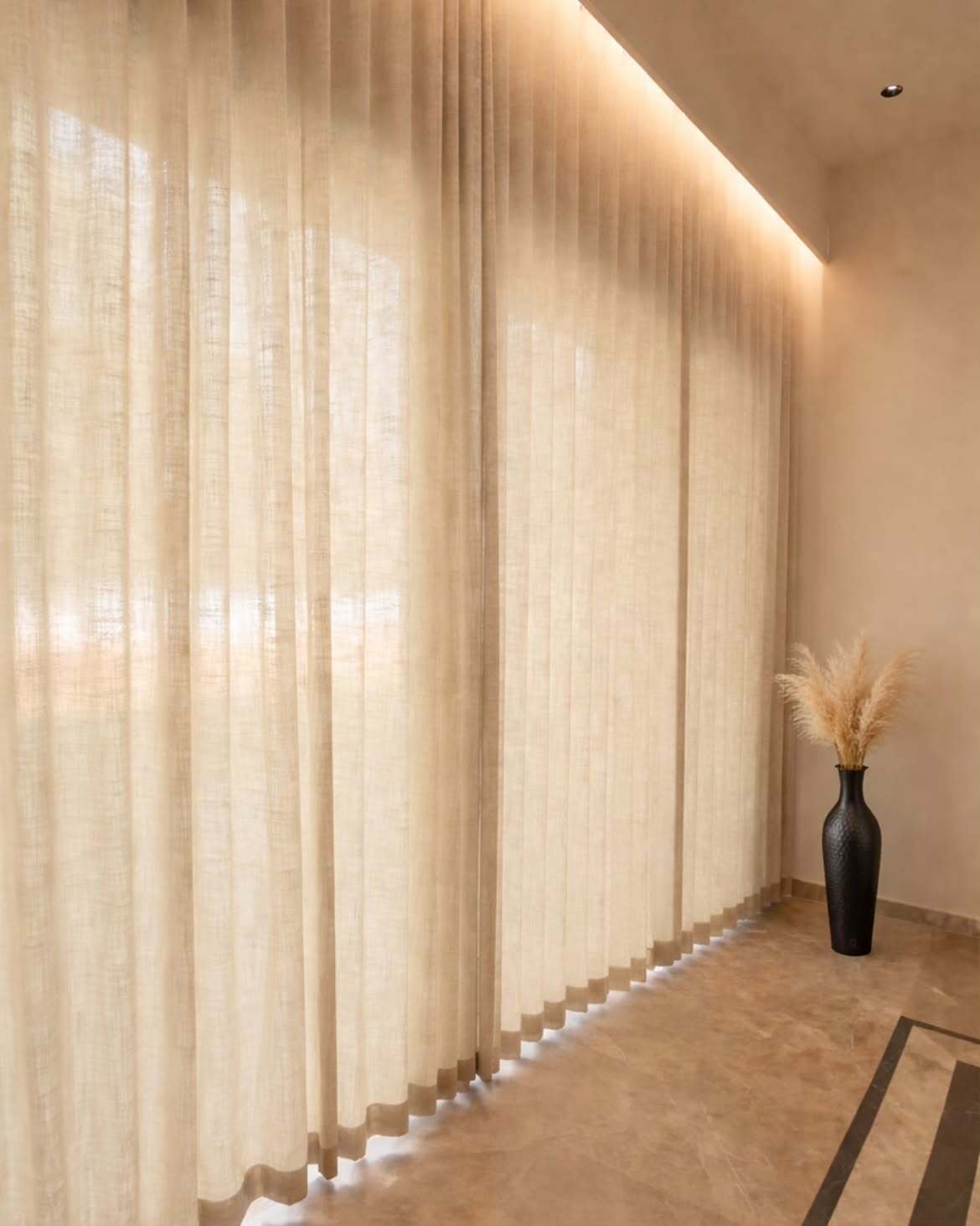
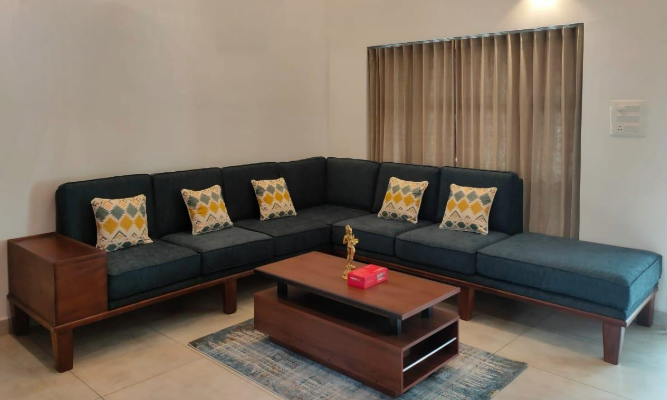
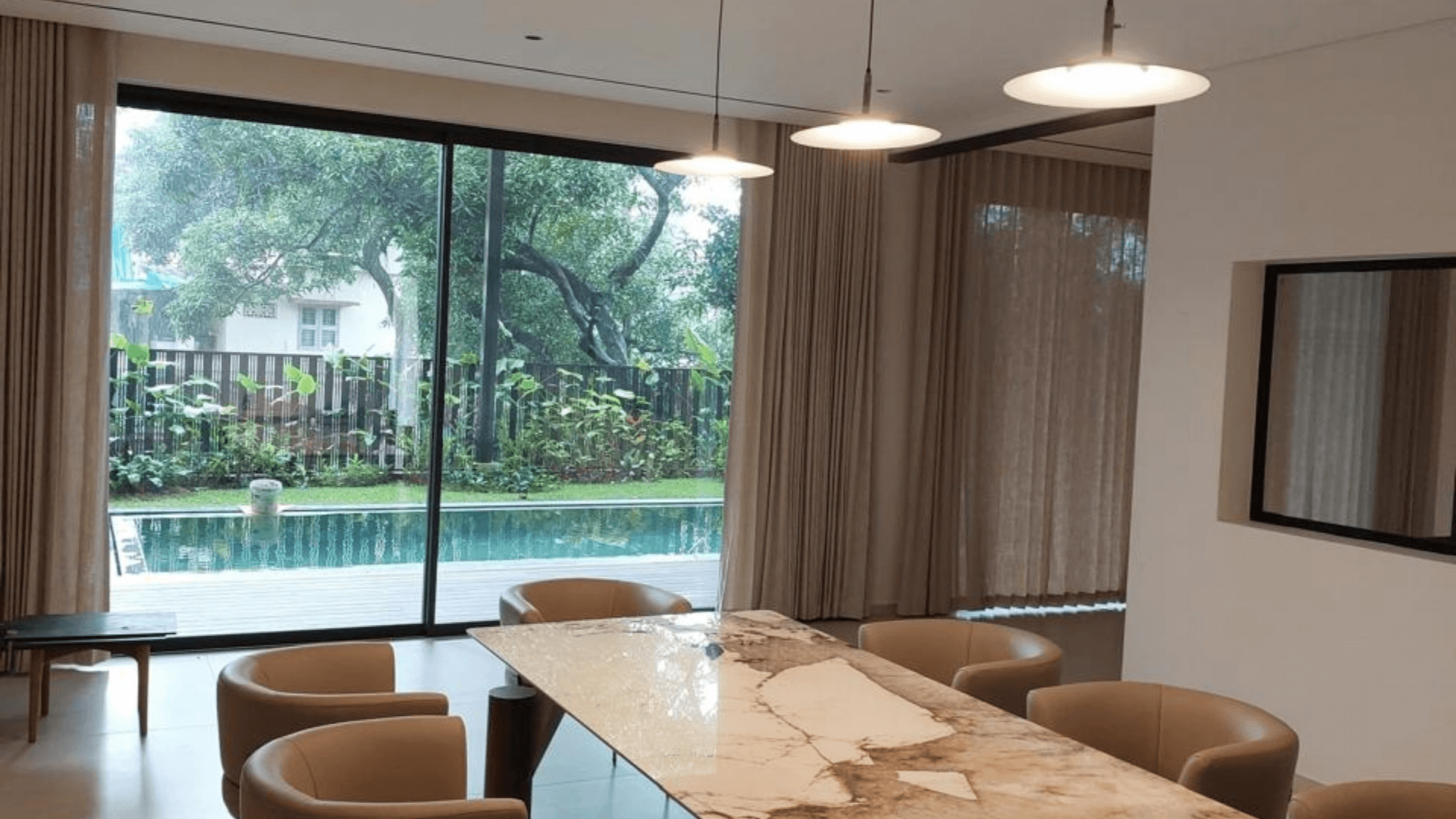
The main reason curtain length gets so much attention from designers is simple: it changes how a room feels more than almost any other detail. Get the length right, and a window looks tailored and intentional. Get it wrong, and even expensive fabric ends up looking like an afterthought. This guide breaks down whether curtains should touch the floor, the different floor-length styles trending in 2026, and when to skip floor length altogether.
What Does "Curtains Touching the Floor" Actually Mean?
It isn't one fixed measurement anymore. Over the past few years, designers have moved away from a single floor-touching standard and now work with three distinct finishes at the hem — floating, floor-kiss, and puddle. Each creates a different mood, and each comes with its own upkeep.
Key Curtain Length Styles to Know
Curtains that end too short make a window look stunted and can make ceilings feel lower than they are. Curtains that are too long turn into a daily chore — dragging, collecting dust, catching underfoot. The three lengths below solve for both problems in different ways.
- Floating Curtains: The hem sits about half an inch to an inch off the ground. Close enough to read as floor-length from across the room, but high enough that nothing drags or collects dust. This is the practical favourite for busy households and high-traffic rooms.
- Floor-Kiss Curtains: A soft graze rather than a full landing — the fabric just barely touches down. It's become the go-to for formal living rooms and dining spaces because it looks deliberate without tipping into high-maintenance territory.
- Puddle Length: Extra fabric, anywhere from three to eight inches of it, gathers in soft folds on the floor. Dramatic and photogenic, best suited to formal rooms that don't see curtains opened and closed constantly.
What Decides the Right Length for You
Do you assume curtain length is just a matter of personal taste? It's actually shaped by a few practical factors working together. Here's what to weigh before you order anything:
- Fabric Weight: Heavy materials like velvet, lined cotton, or thick jacquard hang with real structure, which makes them naturals for floor length. Lightweight or sheer fabric tends to look limp when pooled, and usually looks better ending a touch shorter or floating instead.
- Curtain Function: Blackout and thermal curtains work hardest with no gap at the bottom for light or draughts to sneak through, so full floor length makes sense there. Acoustic curtains benefit from a few extra inches past the floor, since any gap undercuts the sound dampening.
- Heading Style: Pinch pleat and pencil pleat headings already carry visual weight from their folds, so floating or floor-kiss length looks finished without extra drama. Eyelet curtains sit a little higher by nature and pair well with floating. Wave headings, with their smooth continuous folds, are built for full floor-to-ceiling length.
- The Room Itself: Bedrooms, living rooms, and dining areas are where full-length curtains earn their keep — especially with a generous width, around two to two-and-a-half times the rod length, for folds that have some body. A radiator, low sill, or furniture near the window changes the equation entirely.
When Curtains Should Not Touch the Floor
Floor length isn't universal, and forcing it into the wrong spot causes real problems, not just style quibbles.
- Radiators: Fabric resting against a heat source is a fire hazard, and it also blocks heat from reaching the room, which drives up energy bills for no good reason.
- Bathrooms, Kitchens, Basements: Humidity and splashes invite mould, and once it sets into fabric, the curtains are usually beyond saving.
- Homes With Kids or Pets: Trailing fabric is a tripping hazard for toddlers and an open invitation for cats and dogs to play with, chew, or snag.
In any of these spots, a shorter length ending at or near the sill is the safer, smarter choice.
How to Measure for Each Length
Start the same way no matter which length you're going for — measure from where the rod sits down to the floor, then adjust:
- Floating: subtract about half an inch to an inch
- Floor-kiss: subtract a quarter to half an inch
- Puddle: add 3 inches for subtle, up to 8 inches for a dramatic pool
One small trick worth remembering: mount the rod a few inches above the window frame instead of right at it. This alone makes ceilings feel taller and windows feel more generous, regardless of which length you choose.
FAQs
- Is it better to have longer or shorter curtains?
Ans- Longer, floor-grazing curtains are generally the better default for living spaces. They read as more polished and tend to control light and temperature better than short, sill-length panels.
- Can curtains sit a couple of inches off the floor?
Ans- Technically yes, but it rarely looks intentional. Anything more than an inch of gap tends to read as too short rather than styled, throwing off the window's proportions.
- Are sill-length curtains outdated now?
Ans- In formal rooms, largely yes — floating and floor-kiss lengths have taken over. Sill-length still makes practical sense over a radiator, a low sill, or furniture pushed against the window.
- Will standard 84-inch curtains actually reach my floor?
Ans- Usually, if your ceiling is around the standard 8 feet and the rod sits close to the window frame. A higher-mounted rod or taller ceilings may leave the same panels short.
- What length makes sense in a house with kids or pets?
Ans- Stick to something ending at or just below the sill. It keeps fabric out of reach of curious paws and running feet, without giving up much on privacy.
Conclusion
Curtain length in 2026 isn't a yes-or-no question — it's about matching the right floor-length style to how you actually live. Floating and floor-kiss lengths give you that elegant drop without turning into a daily hassle. Puddle length is for rooms where a bit of drama matters more than convenience. And in kitchens, bathrooms, or anywhere with radiators, kids, or pets, shorter is the smarter call every time. Measure carefully, match the length to your fabric and heading style, and the window will look like it was designed that way from the start.
About the Author